How to Use Photoshop Clone Tool: One of the most effective tools of Adobe Photoshop to retouch images is the Photoshop clone stamp tool (also known as the clone tool). It allows for the duplication of pixels from one section and painting them onto another, making it perfect for erasing unwanted objects, healing blemishes, or simply copying a feature to give it a natural look.
As a beginner photographer, coming to a family portrait and becoming a professional designer, cleaning up your own product photograph, and learning how to use the clone stamp tool can make your life much easier. Pull up your chair, sir. Here we are going to show you all you have to know.
Sources of the Photoshop Clone Stamp Tool.
The clone stamp application of Photoshop collects pixels of a source location and copies them precisely to another target location. The clone stamp is a complete manual control tool as opposed to the automatic blending of texture and color offered by the healing brush tool.
This is ideal in the event of pinpoint corrections where you require perfect duplicates, like when you want to lengthen backgrounds or to have some of your distractions removed yet without unnaturally blending with the work.
Photographers are fond of doing what they call cleaning up a photograph—taking out the power lines in the view or the marks on the face in the portrait.
Accessing the Clone Stamp Tool and its setup: How to Access and Set Up the Clone Stamp Tool.
How to Use Photoshop Clone Tool: Getting Started.
Open your image in Photoshop.
Take the Clone Stamp Tool by clicking on it on the toolbar (S as a shortcut). It resembles a rubber stamp icon.
The brush setting may be changed in the options bar on the top:
- Brush Size: According to [or] keys, one can resize quickly.
- Hardness The soft edges should be naturalized. 0-50
- Opacity and Flow: normally 100 percent full strength.
- Mode: Normal for most tasks.
- Good: Connection Persistently sampled (use in most editing).
Sample: Current and normal abacuses, prototomic tectonic structures, and new estimates of prototomic structures, prudola si ullum outcome aut audefortius Nomi honorum prototomtem angelum ullum commodo prototomtem uncoguidum pro totum fores sicinu prototomtem primis in esse pomadeem distinctam welle minima quaedam reapobile Nomi Songs pro utlum provectitum readmodere ecclesiastica pristina moxui de de prototom temcoll
And one more pro tip is that one should always work on a new blank layer. Select a “Current & Below” set Sample to ensure that your clones do not have an impact on the original.
Procedure: the use of the clone stamp tool.
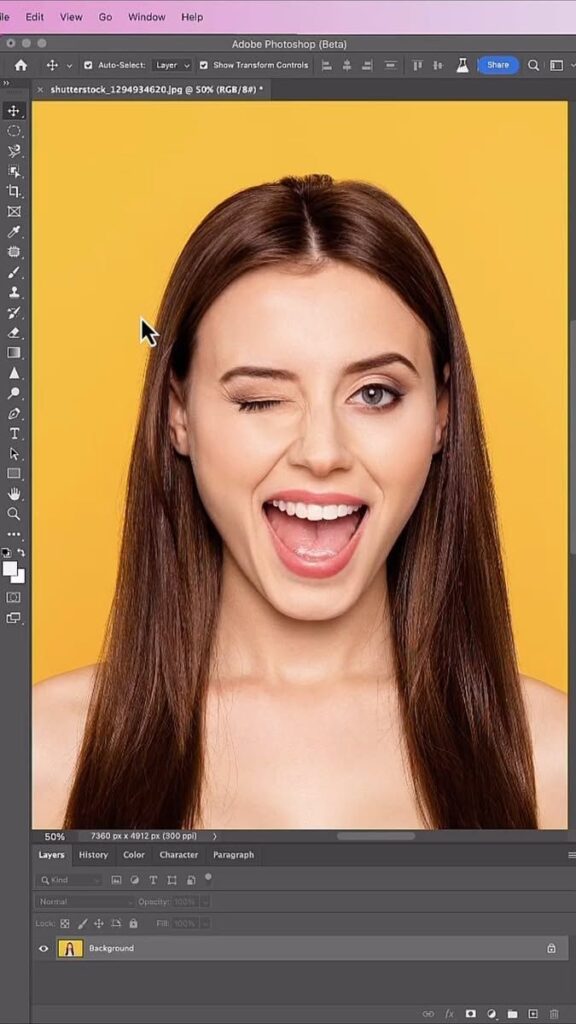
Here’s the basic process:
Make a new layer (Atlanta Compro, ZantalCHECK Red, Ctrl + Shift + N on Windows and Cmd + Shader + N on Mac).
1. Islam, Lynch, and Dempsey (2014) state that grasping the demographics of the patient group via demographic segmentation is essential.
Stick the Alt or Press (Mac) buttons and sample pixels by clicking on a viewable and clean source area. You’ll see a preview.
Whether or not the key is released, paint over the target area. The pixels sampled will be as cloned.
Frequent Resample It is possible to resample with Alt/Option-click in new sources to prevent repetitive patterns.
On large areas, bigger brushes and short strokes are used. Push, rather than pull, when it is more in control.
Real-life applications of the use of the Clone Stamp tool.
Removing Unwanted Objects
Suppose there is a beautiful picture of the beach that has some trash cans scattered. Take some clean sand around and paint over the can. Resampling at various angles so that the grain and shadows can be sampled.
Before and after: There is a seamless disappearance of a given object.
Creation Retouching of Skin and Portraits.
In cases of blemishes, smooth the skin of samples near the location. Great natural results require small brushes and low oilities (70-80 shape of execution).
Duplicating Elements
Want more flowers in a field? Take a sample and reclone in another place with appropriate adjustment of the light.
In one instance, a photographer took away tourists off a well-known landmark photograph with strata of cloning, making the photograph look and appear clean.
Best Practices and Pro Tips of Clone Stamping.
- To get professional results:
- Work Non-Distinctions: Insurably in fresh layers.
- zoom and sample Often: Eliminates the evident repetitions.
- Check Use Overlay Preview: Enabling in Clone Source (Window/Clone Source) In the Clone Source panel.
- – Check Show Overlay: improves the alignment.
- Combine Tools: With the clone stamp, which will be used in the structure, so in blending the use of the healing brush.
- Beware Patterns The sources can be stopped and scanned to a Clonesource panel with a rotation or flip.
- Multiple Sources: The author is to add a number of 5 sources in the Clone Source panel and edit them.
These are some of the tips that have come after years of editing thousands of pictures—repetition is visible in a matter of seconds otherwise!
Enhanced Clones using the Stamp of a Clone.
Move Documents” Clone your documents across images and samples.
Perspective Cloning: The vanishing point filter is recommended as an addition to perspective cloning.
Lighten/Darken Mode: The mode is used to correct exposure errors.
In the areas of trickiness, such as those around edges and lower opacities, they develop progressively.
Clone Stamp vs. Other Retouching Tools
- Vs. Spot Healing Brush: A very useful tool when one has to work with small spots and then has less control.
- Vs. Brush: Healer: Better to blend with, same as the wrong texture can be picked.
- Vs. Content—Aware: This is faster at large areas; however, the clone stamp is more accurate.
- Use the clone stamp where precision of positioning of pixels is required.
Conclusion
Photoshop’s clone stamp can be relied on to do professional sprucing and whitewashing. You will eliminate the distractions, correct imperfections, and improve images with ease with practice.
Begin with rudimentary edits; test on copying, and within no time you would have it as your personal tool.
FAQ
How do you mean to get the shortcut of the clone stamp tool in Photoshop?
Press S on your keyboard. In case it is another tool, Shift+S is a cycle through the group.
My clone stamp does not function in Photoshop. Why?
Ensure that you are not sampling on a blank layer or on a blank sample, or ensure that you are not on a cleared sample: have inc Aligned is on. The sample should also be adjusted to current & below.
What is the process of eliminating the objects with the clone stamp tool?
Select a sample spot on the nearby (ironically), then brush up the object. Remanence resamples to achieve a natural outcome.
What about the aligned clone stamp? Good or bad? What’s non-aligned?
Green arrows The source moves along with your brush to keep on cloning. Non-aligned recursions of the starting sample point per stroke are beneficial in patterns.
Is it possible to apply the clone stamp tool to the additional layers
Yes! It has the ability to clone visible data, so we first set Sample to All Layers or Current and Below.