How to set up social media accounts for a business? In today’s digital landscape, the key for successful business owners is to build a robust social media presence to drive success. With this guide, you will go through the steps to set up your business’s social media presence, leverage these platforms, define your brand preferences, and reach potential customers.
The Knowledge of how to set up social media accounts for a business.
Reasons why Social Media matters in Businesses.
Business social media is no longer an option; it is mandatory. Building a strong social media presence will help you reach a wider audience and connect with your target audience on a personal level. Leveraging social media to engage customers effectively helps build brand awareness, generate leads, and drive sales. Thoughtful social media strategy is the guarantee that your social media activity will result in real business development, and social media management remains one of the key elements of your general marketing strategy.
Setting Your Social Media Objectives.
It is imperative to clarify your social media objectives before establishing a business presence on any platform. What are your goals in using social media marketing? Do you want to raise brand awareness, promote online, or generate leads? Your social media strategy will be guided by clonline genegeneratethis will assist you in determining how successful your social media initiatives have been. The first step in developing a social media plan aligned with the overall business objectives is to understand your goals.
Defining Who You Are Selling To.
The first element of a successful social media marketing is knowing who your target audience is. Who are you trying to reach? What are their interests, demographics, hi, cs, and online behaviors? Knowing your target audience is in your interest, as it helps you identify which social media platforms to use and tailor your content to your target audience. For example, a B2B business may target LinkedIn, whereas a brand focused on visual content may prioritize its Instagram page. The primary reason this is important is that identifying your target audience determines the type of content and which social media platform to focus on.
Installing Your Social Accounts.
The following is a practical guide to establishing your social media accounts. The initial steps include:
Selecting a social media tool that fits your business requirements. The most popular are Facebook Business Page, Instagram Business Account, LinkedIn, and so include
Ensure all social profiles share the same business to promote the brand. Create your business account by providing basic information about your business, including contact details, website, and an engaging “About Us” section.
Post a professional cover photo that accentuates your brand graphically in line with the visual characteristics of your audience.
For additional assistance with your social media, consider using a tool like Sprout Social to streamline your social media activities.
Don’t forget to review materials such as the guide to social media marketing, the “place to start social media marketing in business” post (Social Media Examiner), and the “social media in business” post (Hootsuite blog), which offer additional tips and advice.
Choosing the ideal Social Media media.
Introducing an Overview of Popular Social Media Platforms.
The social media platform is a vast environment with diverse content formats. Ok is a content formatsmassive platform, with a broad demographic reach and the ability to build a community through a Business Page. Instagram is optimized for visual content and is therefore well-suited to brands with strong aesthetics. LinkedIn is aimed at professionals and B2B. It takes one to know the strengths of each social media platform to select the one that best fits your business. X, TikTok, and Pinterest are other social networks that could be helpful for the target group.
Selecting the Right Platform for Your Business.
The choice of social media platform should be based on the network’s demographics, content type, and alignment with your business and brand . If your potential customers are visual, it may be more effective to focus on Instagram and Pinterest. LinkedIn is the preferred platform for reaching professionals and exchanging industry insights. The broad reach of Facebook may be an asset if your target audience spans multiple demographics. This business alignment improves your social media strategy.
Establishing a Business Dashboard on Major Platforms.
After identifying the most appropriate social media platform for your business, you need to establish business accounts. There are several significant actions included:
Creating special profiles, which are not of your personal accounts.
The second step is to ensure you list your business name on all social profiles to build brand recognition.
The key step is to provide accurate information about your business, such as a link to your website, a brief description, and contact details.
A strong business account is a professional, credible point of contact for your audience.
Creating Your Business Social Media.
Actions to be taken to establish social media accounts.
The following is how you can create social media accounts to promote your business, which can be divided into the following essential steps:
- First of all, find one of the social media channels that you think your target audience will be interested in.
- Develop a business profile and not a personal profile.
- Keep consistent branding across all social platforms, with your logo and business name.
- Complete profile information, such as website contacts, and a powerful about us section.
- Here are some steps to establish a professional presence on social media.
- Another way to attract customers is to maximize your social media presence.
It is essential to optimize your social media pages to attract and capture the attention of potential customers. Keywords are the necessary words to use when describing your profile so that people can see you in the search results. Make sure your contact details are correct and up to date. Make sure you use high-quality, brand-aligned images and videos. When updating your social media pages, ensure you use fresh, engaging content. Such activities make social media more visible and attractive to your target market, making them easier to manage.
Designing Increasingly Compelling Cover Photos and Bios.
The best real estate on your social media pages is your cover photo and bio; they make a first impression on potential customers. The cover photo must visually represent your brand and be visually appealing. Your bio should describe our business and what it offers, and include a link to your website. With a catchy cover photo and bio, your social media presence can improve considerably, helping you reach your target audience. Your cover photo and bio will also be used to show what kind of content you are posting.
Another tool to consider for managing your social accounts is Buffer. Other resources can be found by reading about using social media as a business tool on HubSpot here and by Neil Patel on the benefits of social media marketing here.
Designing a Social Media Strategy.
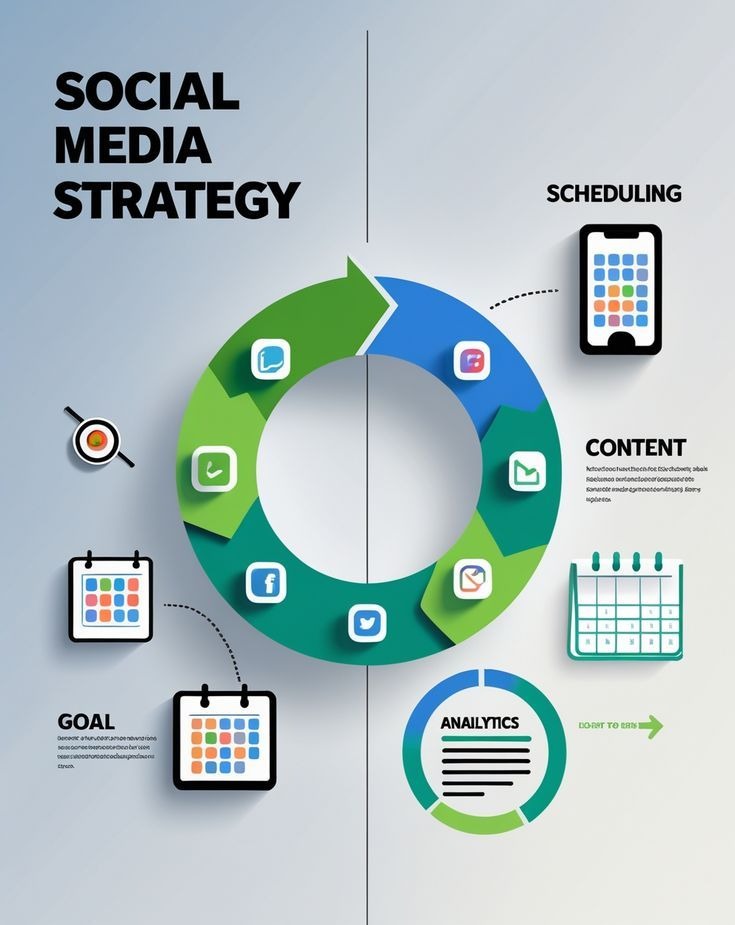
Developing Social Media Plan.
Designing a robust social media strategy is the key to an effective social media marketing process. Your social media strategy must clearly state your objectives, target audience, and the social media channels you plan to use. This strategy will inform your production schedules, posting times on the company page, and engagement strategies. A well-defined social media strategy will help business owners ensure their social media activities support their overall business goals and deliver maximum impact on target markets.
Best Practices in creating the content.
To maintain engagement with your target market and attract new followers, you need high-quality content on your social media channels. Know what your followers like to see, and post accordingly. A combination of text, images, videos, and interactive content can help make your social media profiles more engaging. Create relevant, informative content for your social media that fits your brand’s voice. It will give you a more substantial social media presence and build trust with your audience in your business by consistently producing value-added content.
How to Manage Your Social Media Presence.
Social media management goes beyond content posting to ensure successful processes that must be monitored, engaged with, and analyzed. Check social media regularly, commenting, responding to messages, and providing support. Quickly respond to queries and feedback. Simplify social media management with tools like Sprout Social to monitor your performance. Your social media presence will always be active and responsive, and it must always align with your business goals, which can be achieved through proper management.
Expanding Your Social Media Reach.

Plans to Enhance Attendance.
To maximize your social media activity and increase your presence, focus on using effective engagement strategies. Promote interaction through questions, polls, and contests. Use appealing items to capture attention. Partner with other companies and influencers to access a new audience. Use social media advertising to promote your content and target specific demographics, increasing your social media presence. Such plans can tremendously increase activity and reach.
Embracing Analytics to work better.
Analytics would help determine how well your social media strategy is performing. Monitor key metrics, including reach, engagement, traffic, and web conversions. Take these lessons to learn what is and is not working. Test various content types, posting hours, and targeting. Also, regularly update your social media plan based on data-driven insights to optimize your social media activity and achieve better outcomes. Businesses should leverage social media to achieve optimal results.
Modifying Your Strategy Over Time.
The social media environment is ever-changing, so it is essential to adjust your strategy over time. Be aware of recent developments, advancements, and modifications to algorithms and platforms. Adopt newtechniques andd innovations. Regularly review your social media objectives and adjust your plan. By being flexible and responsive, you can ensure your social media profile is effective and aligned with your business goals. Stay relevant with business using social media.
Conclusion
Building a successful social media campaign is an ongoing process thattakes commitment and flexibility. With this guide, a business owner can easily establish social media accounts, identify the right platforms, develop compelling content, and build an effective social media strategy. Businesses that are ready to invest the discipline and desire to adapt can leverage social media as a marketing channel to grow the company and build sustainable relationships with prospective customers. Proper management of social media is critical to long-term success.
FAQS
Q1.How do you make social media accounts for a business?
The first step in establishing social media accounts for your business is to determine which platforms have the strongest connection to your target audience. Create your business account using your business name and logo to ensure consistent branding. Complete all fields regarding your business, including your website and contact information. Use relevant keywords and compelling social media pages to attract potential coverage and have a professional social media presence across all platforms.
Q2.What is the 5 5 5 social media money detachment?
The social media 5-5-5 rule is a process for producing value-centered content in brief, and it lives up to its name. It implies developing posts that take no more than five seconds to read the headline, five minutes to read the entire post, and five minutes to watch a video. This content is designed to capture the target audience’s attention as quickly as possible and convey the information. Following this rule, business owners can be confident that their social media content is engaging and easily consumed by potential customers.
Q3.What is the 50 30 20 rule of social media marketing?
A 503020 rule is a social media marketing guideline for content distribution. According to it, half of your social media content should drive sales and generate leads, a third should repost content from thought leaders and other people in your organization, and a fifth should be dedicated to personal branding and interaction. Such a balance will ensure that you not only promote your business but also provide helpful information and build relationships with your target audience. The company page will be more eclectic.
Q4.Is it possible to have a social media account that belongs to an LLC?
Yes, it is possible to have a social media account owned by an LLC (Limited Liability Company). In constructing the account, apply the official name of the LLC, and all details of your business must represent the LLC. It is one way of positioning the account as a business asset. Using the social media accounts under the LLC would provide additional legal protection and separate the business’s liability from personal liability. Business owners must ensure that the social media channels used belong to the LLC.
Q5.Are you selling a product or service?
Before diving into social media marketing, clarify whether you are selling a product or a service, as this will shape your strategy. Product-based businesses thrive on visual platforms like Instagram and Pinterest, showcasing product images and videos. Service-based companies may benefit more from platforms like LinkedIn and X, where they can share expertise and engage potential customers with informative content. Understanding what you offer will help you tailor your social media content effectively. This type of content will influence the success of social media efforts. For tips on effective content creation and marketing, check out CoSchedule’s guide on social media content strategy and Meltwater’s insights on social media strategy.